Posts

Spinoza on Human Nature and Morality, Part 1

Image
  Background The human pursuit of power, wealth, and empire derives from a fundamental aspect of life on Earth. It originated with life itself as a response to the need to survive and a desire to flourish. At its birth, its coming to life, every organism grows and exploits to the fullest every useable resource it encounters to serve its need to survive and desire to flourish. It does so until it encounters other living and/or physical environmental constraints. This results in that life form being contained or killed, or its continuing to exploit all it encounters to the point of destroying the resources and life systems that give and sustain its life. Humans have been no exception. With our “sapient” emergence beginning about 300,000 years ago we brought this fundamental drive to survive and desire to flourish with us – something genetically inherited and behaviorally learned from all other life forms that preceded and nourished us. What Old World primate has not encountered a tre...

Cultural Authenticity

Image
  Image: Francks Deceus, Arco Gallery   To understand culture and any particular culture one must first examine how culture content accommodates the needs of mainstream society and its individuals, because the fit and rules of culture are meant to best accommodate the mainstream. One must also look at how a society’s culture is responded to by groups and persons  not  in the mainstream. It is here that the authenticity of the beliefs, values, and norms of a given time are often questioned and challenged. Does the culture content remain suitable for enough people for the society’s survival and possible flourishing? Sometimes efforts, informal or formal, are undertaken to change the content and power of a culture to better suit the times and needs of more or fewer members of a society. Democratic societies seek to make their respective cultures more inclusive; autocracies favor less inclusion. When minority persons join the mainstream, they expand the inclusivity of so...

"Strategies for Creating African American Museums and Cultural Spaces," An Owl & Ibis Presentation by John Cruickshank

Image
  Image: Courtesy of John Cruickshank Kudos to John Cruickshank for his outstanding presentation, "Strategies for Creating African American Museums and Cultural Spaces." Here is a PDF version of John's PowerPoint slideshow. In his comprehensive presentation John covered the institutional history of African American museums, background on Julius Rosenwald and the schools he created, and the views of two prominent African American museum directors, Lonnie Bunch and Bryan Stevenson. John's presentation was particularly focused on the Our Legacy: The Griffin-Spalding African American History Museum in Griffin, Georgia. John is a member of that museum's steering committee. John's Statement of Argumentation In the United States, we have generally done a very poor job of creating cultural spaces that help us understand our history, who we are, the nature of our problems and how those problems emerged. The American South is littered with iconography designed to memor...

“On Top of Old Topper – A Surprising and Inspiring 'Backstory' of an American Cultural Icon of the 1950s!" by Pam Dewey

Image
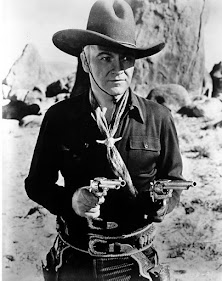
    William Boyd as Hopalong Cassidy                           Hopalong on his horse, Topper  Attached  here  is a wonderful new documentary on famous American cowboy actor William Boyd, and the movie and TV Western hero he portrayed and came to emulate in his personal life, Hopalong Cassidy. Pam Dewey, author, documentary producer, and US social historian, has masterfully put together yet another account of 19th and 20th Century America’s story, and the myths and legends of its making. In her presentation, Pam's attention to historical detail and infusion of aspects of her early life in the US Midwest during the middle of the 20th Century make this production highly educational and authentic. The male heroic themes Ms. Dewey explores have continued to resonate in North America and in slightly altered forms worldwide, from the 1980s into the early 21st Century. One need look no furth...

God, Secular Ethical Living, and Happiness: Kierkegaard Partially Digested

Image
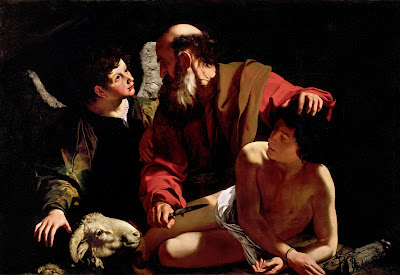
Sacrifice of Isaac. Michelangelo Merisi, detto il Caravaggio (Caravaggio, Milano 1571 – Porto Ercole, Grosseto 1610) Ruminant stomachs have four compartments. So do the minds of some featherless bipeds. I have gnawed and swallowed Ryan Kemp’s essay on Danish philosopher Søren Kierkegaard (1813-1855),  “An Unlikely Meditation on Modern Happiness.”  I have now regurgitated it from my mental rumen and begun chewing its cognitive cud. Next it will pass to my subsequent deeper mental stomachs to be fully digested. Ultimately to be assimilated into my being as knowledge or plopped behind me as, well, bullshit. Here are my initial ruminations. I will not know, until I read and understand it, what Kierkegaard means in  Fear and Trembling  when he uses the expression “infinite resignation” to describe how he chose submitting to God. Based on my frustrations reading and comprehending other of K’s works, I am not looking forward to trying. But I will try unless life’s clock run...

"On the Trail of a Major Story" - A History of the Trail of Tears by Pam Dewey

Image
Mural (8-by15 foot) by Elizabeth Janes (1938-39) depicting the arrival of Cherokee Nationin Oklahoma in the 1830s, on display at the Oklahoma Historical Society, Oklahoma City. The  Trail of Tears  was part of the Indian removal, a series of forced displacements and ethnic cleansing of approximately 60,000 Native Americans of the Five Civilized Tribes between 1830 and 1850 by the United States government. Tribal members "moved gradually, with complete migration occurring over a period of nearly a decade.” Members of the so-called Five Civilized Tribes – the Cherokee, Muscogee (Creek), Seminole, Chickasaw, and Choctaw nations (including thousands of their black slaves) were forcibly removed from their ancestral homelands in the Southeastern United States to areas to the west of the Mississippi River that had been designated Indian Territory. The forced relocations were carried ou...

'Electric Vehicles and Achieving Net Zero Carbon Emissions' by Doug Nichols

Image
  Many thanks to Doug Nichols for his outstanding presentation at the October 30, 2021 Owl & Ibis - A Confluence. Doug called his talk "Will Electric Vehicles Serve a Major Role in Reaching Net Zero Carbon Emissions by 2050?" Doug's comprehensive coverage of electric vehicles (EVs) focused mainly on passenger cars.  Here  is a link to his Apple Keynote slideshow. It takes a few minutes to open on a PC but it and the videos it contains will open and play. During his talk Doug covered the following topics and much more. Most of the information contained in his narration is contained in his slides.  Battery life, safety, recycling, and recharging at home and on the road. Ongoing battery research & development and information about component minerals and mining industry providers. EV cost by vehicle and manufacturer, and the steady downward trend in cost to consumers. EV operating and maintenance costs. Comparison of EV and ICE (internal combustion) emission...